Aluminum wiring remediation across Tampa Bay
Homes built in the mid-1960s through the mid-1970s across Seminole Heights, Temple Terrace, Hyde Park, and the older cores of St. Petersburg were often wired with aluminum branch circuit wiring instead of copper. Aluminum wiring itself isn't automatically dangerous, but it expands and contracts differently than copper at the connection points, which loosens outlets and switches over time and creates a real fire risk at every receptacle it touches.
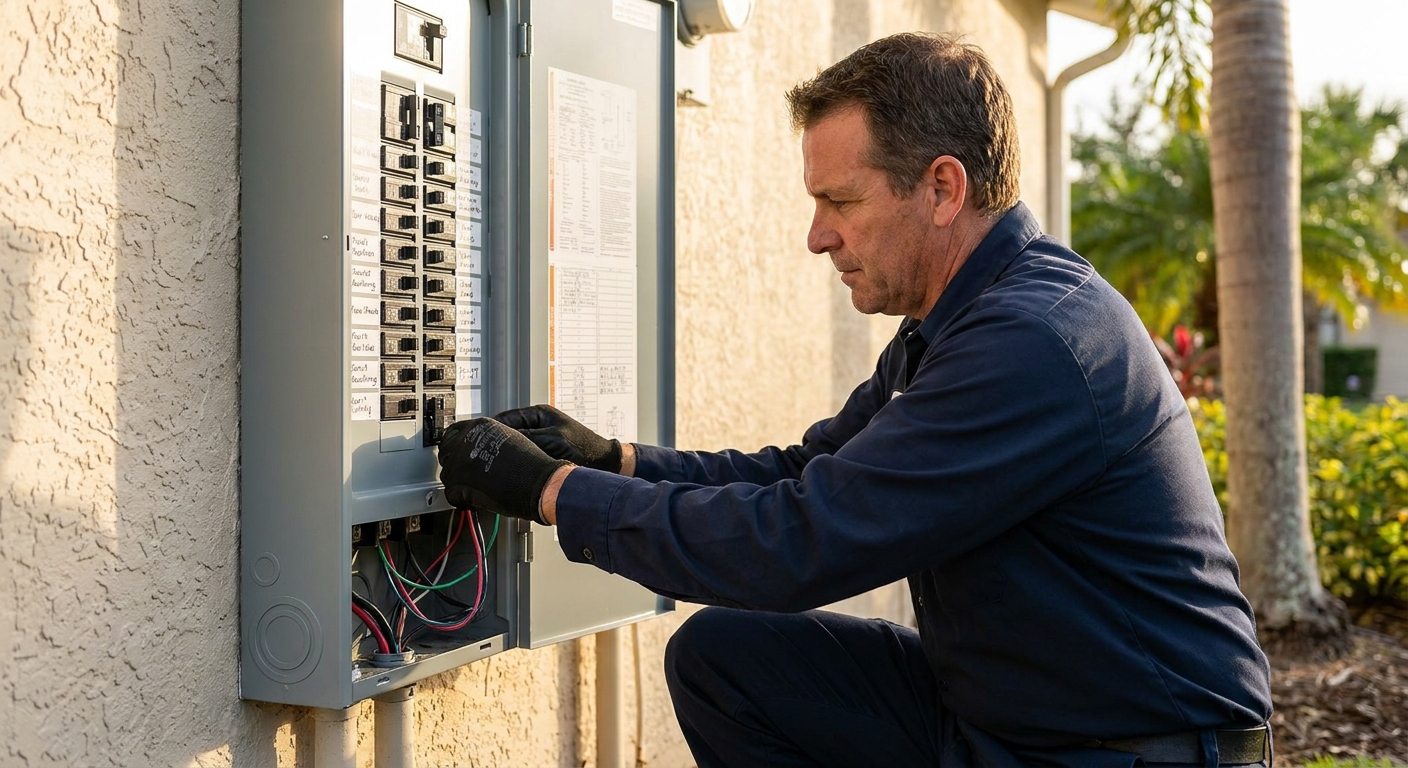
What's included in this service?
- Inspect every connection point to identify aluminum, copper-clad aluminum, or copper
- Pigtail connections with COPALUM crimps or AlumiConn connectors at outlets and switches
- Quote a full copper rewire when that makes more sense than connector-based repair
- Check outlet covers, switches, and fixtures for heat and discoloration
- Write an inspection report your insurance agent can accept as documentation
- Explain which approach fits your budget, timeline, and insurer requirements
When do you need this service?
- A home inspection report or insurance non-renewal letter flagged aluminum wiring
- Warm or discolored outlet covers
- Flickering lights that aren't bulb-related
- A persistent burning smell near switches or outlets
- Breakers that trip for no clear reason
- Your home was built between roughly 1965 and 1975 and has never been rewired
What do homeowners ask about Aluminum Wiring Remediation?
Is aluminum wiring actually dangerous in my Tampa home?
Aluminum wiring itself carries current fine, but the connection points at outlets, switches, and fixtures loosen over time because aluminum expands and contracts more than copper does with heat cycles. That loosening creates arcing and heat buildup, which is where the fire risk comes from. It's a real issue, but one that's fixable with proper remediation rather than something that requires panic.
Will my insurance company cancel my policy over aluminum wiring?
It happens regularly in Tampa Bay's older neighborhoods. Several Florida carriers now require an electrical inspection or refuse to renew once aluminum wiring shows up on an underwriting report, particularly in Seminole Heights, Tampa Heights, and pre-1975 St. Petersburg homes. We provide a written remediation report your agent can submit, which resolves most of these situations.
What's the difference between pigtailing and a full rewire?
Pigtailing uses COPALUM crimps or AlumiConn connectors to join the existing aluminum wire to a copper pigtail at each connection point, fixing the failure risk without replacing the wire itself. A full rewire replaces the aluminum branch circuits entirely with new copper. Pigtailing costs less and satisfies most insurance requirements, while a full rewire is more disruptive but permanent.
How much does aluminum wiring remediation cost in Tampa?
Connector-based remediation on a typical three-bedroom home runs $2,000 to $5,000. A full rewire runs $8,000 to $18,000 depending on square footage and how much drywall access is needed. We inspect the home first and give you both options with real numbers before recommending one.
How do I know if my house has aluminum wiring?
Homes built roughly between 1965 and 1975 in Tampa Bay are the highest-risk window, especially in Seminole Heights, Tampa Heights, and older St. Petersburg neighborhoods. The wire itself has a dull silver color rather than copper's reddish tone, and it's often stamped with "AL" or "Aluminum" on the sheathing. We can confirm it in a single inspection visit.
Where do we offer Aluminum Wiring Remediation in Tampa Bay?
We provide aluminum wiring remediation in every city and community in Tampa Bay County. Pick your city for local climate notes and service specifics.
See aluminum wiring remediation in all 72 cities
Need aluminum wiring remediation in Tampa Bay?
Call for a free quote. Most work scheduled within the week.